Toroniku Shoyu Ramen
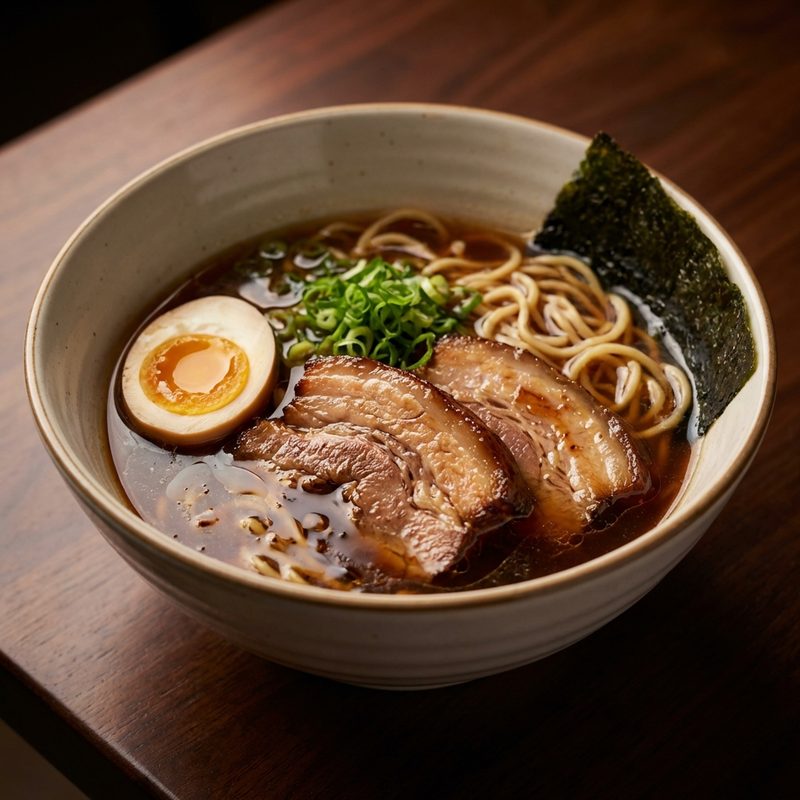
Experience the luxurious texture of simmered pork jowl paired with a deep, umami-rich soy sauce broth and perfectly springy noodles. This Toroniku Shoyu Ramen is a masterclass in balance, offering a rich yet clean flavor profile that rivals the finest ramen shops in Hokkaido.
Prep
30m
Cook
150m
Serves
4
1 Ingredients
| Qty | Ingredient |
|---|---|
| 1.1 lbs 500 g | Pork Jowl (Toroniku) |
| 0.5 cup 120 ml | Soy Sauce (for Tare) |
| 0.25 cup 60 ml | Mirin |
| 0.25 cup 60 ml | Sake |
| 1 inch piece 20 g | Fresh Ginger, sliced |
| 3 cloves 15 g | Garlic Cloves, smashed |
| 6 cups 1.5 L | Chicken Stock (unsalted) |
| 2 cups 500 ml | Dashi Stock |
| 4 servings 600 g | Fresh Ramen Noodles |
| 4 pieces 4 pcs | Soft Boiled Eggs (Ajitama) |
| 2 stalks 20 g | Green Onions, finely chopped |
| 2 sheets 2 sheets | Nori Seaweed |
2 Method
Step 1. Sear the pork jowl in a hot pan over medium-high heat until all sides are golden brown to render out excess fat.
Step 2. In a heavy-bottomed pot, combine the seared pork, soy sauce, mirin, sake, ginger, and smashed garlic. Add enough water to barely cover the meat.
Step 3. Bring the liquid to a boil, then immediately reduce to a low simmer. Cover and cook for 2 to 2.5 hours until the pork is extremely tender.
Step 4. Remove the pork from the liquid and let it cool slightly before slicing. Strain the remaining braising liquid into a bowl; this is your Shoyu Tare.
Step 5. In a separate large pot, combine the chicken stock and dashi. Bring to a gentle simmer to keep hot.
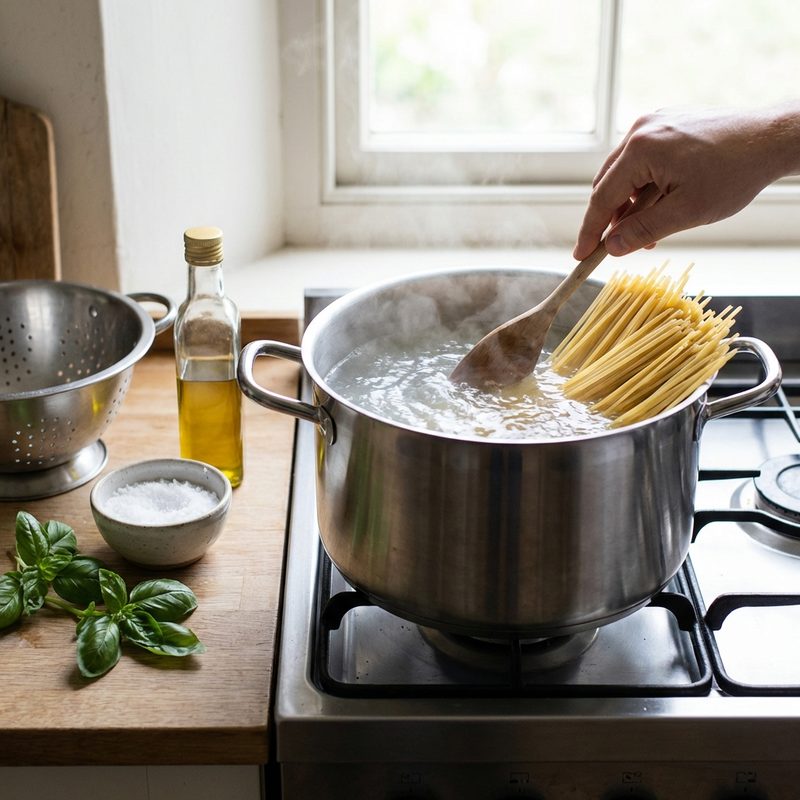
Step 6. Cook the ramen noodles in boiling water according to the package instructions (usually 2-3 minutes). Drain thoroughly.
Step 7. To assemble, pour 3 tablespoons of the Shoyu Tare into each bowl. Add 500ml of the hot broth mixture and whisk gently to combine.
Step 8. Place the noodles in the broth, then top with the sliced toroniku, a halved ajitama egg, nori, and a generous sprinkle of green onions.
💡 Chef's Tips
-
·
Chill the pork jowl in the refrigerator for 30 minutes before slicing to get perfectly clean, restaurant-style cuts.
-
·
Do not boil the final broth once the dashi is added, as high heat can dissipate the delicate aroma of the fish stock.
-
·
If the braising liquid for the pork is too salty, dilute it slightly with a splash of dashi before using it as the tare.
-
·
For the best texture, ensure your serving bowls are pre-warmed with hot water so the ramen stays hot until the last bite.



Be the first to leave a comment.