Toroniku Uobushi Tonkotsu Ramen
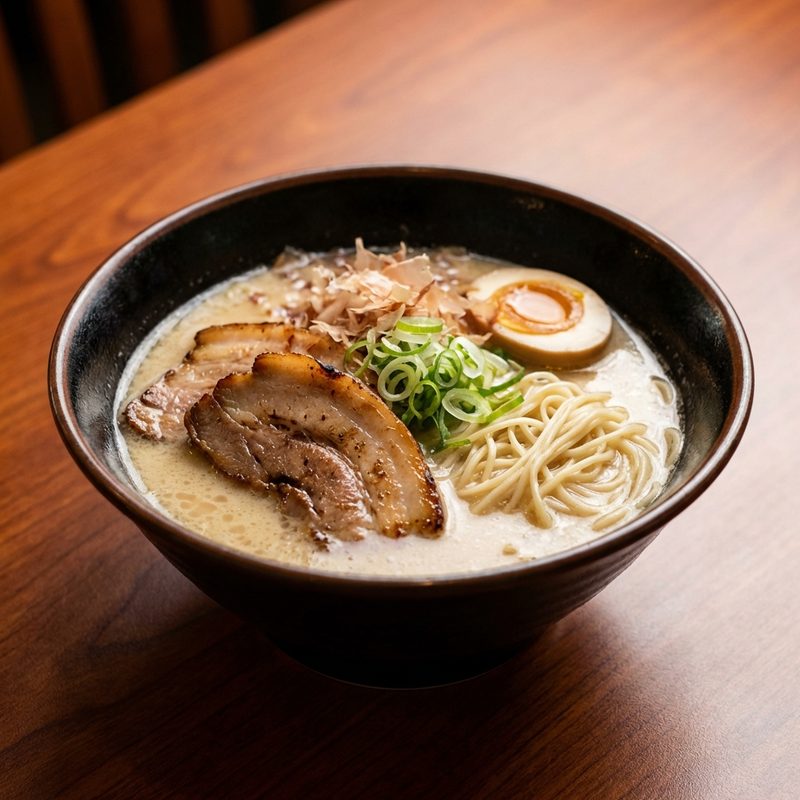
Indulge in a masterpiece of Japanese culinary tradition featuring 'Toroniku'—succulent, melt-in-your-mouth pork jowl—and a 'Uobushi' (dried fish) infused Tonkotsu broth. This ramen offers a complex harmony of creamy pork lipids and deep, smoky umami notes that will transport your senses to the heart of Hokkaido.
Prep
60m
Cook
720m
Serves
4
1 Ingredients
| Qty | Ingredient |
|---|---|
| 2 kg 2000 g | Pork Femur Bones |
| 600 g 600 g | Pork Jowl (Toroniku) |
| 2 cups 40 g | Katsuobushi (Bonito Flakes) |
| 0.5 cup 15 g | Sababushi (Mackerel Flakes) |
| 4 portions 600 g | Fresh Ramen Noodles |
| 1 cup 240 ml | Soy Sauce |
| 0.5 cup 120 ml | Mirin |
| 0.5 cup 120 ml | Sake |
| 2 inches 5 cm | Ginger |
| 1 head 1 head | Garlic |
| 1 large 200 g | Yellow Onion |
| 4 pcs 4 pcs | Ajitsuke Tamago (Marinated Eggs) |
| 0.5 cup 50 g | Green Onions |
2 Method
Step 1. Prepare the bones: Soak pork femurs in cold water for 2 hours to extract blood. Blanch in boiling water for 15 minutes, then scrub thoroughly under cold running water to remove all dark marrow and impurities.
Step 2. Simmer the Tonkotsu: Place cleaned bones in a large pot with onion, garlic, and ginger. Cover with water and boil vigorously for 10-12 hours, topping off water as needed, until the broth is milky white and opaque.
Step 3. Braise the Toroniku: In a separate pot, combine soy sauce, mirin, sake, and a bit of sugar. Add the pork jowl and simmer on low heat for 2.5 hours until it reaches a buttery texture. Remove and slice carefully just before serving.
Step 4. Infuse the Uobushi: In the final 30 minutes of broth cooking, add the katsuobushi and sababushi to the pot. Alternatively, strain the broth and steep the fish flakes for 10 minutes to create the 'Uobushi' smoky profile. Strain the final liquid through a fine-mesh sieve.
Step 5. Assemble: Place a spoonful of the pork braising liquid (as a tare) in each bowl. Pour in the hot uobushi tonkotsu broth. Add cooked ramen noodles, top with sliced toroniku, half an egg, and chopped green onions.
💡 Chef's Tips
-
·
A rolling boil is essential for Tonkotsu; the turbulence emulsifies the fat into the water to create the creamy white color.
-
·
Do not slice the Toroniku while it is piping hot; let it cool slightly so it holds its shape.
-
·
For an extra layer of flavor, grind some of the dried fish into a fine powder and sprinkle it on top of the finished bowl.
-
·
If you don't have 12 hours, a pressure cooker can achieve similar results in about 3 hours.

Be the first to leave a comment.