Cha Shu Tonkotsu Ramen
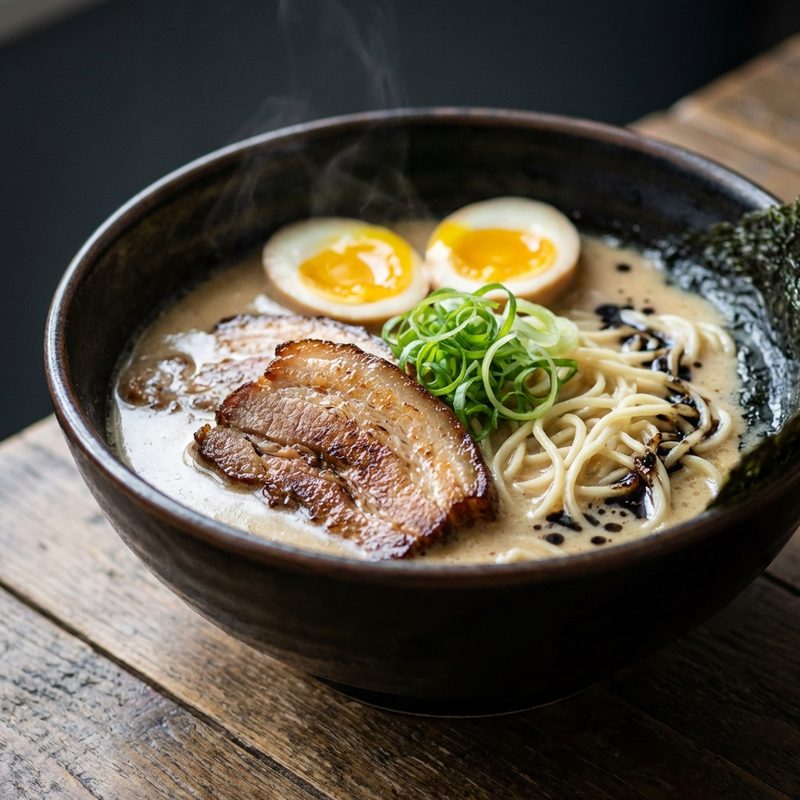
Experience the soul-warming richness of a traditional milky Tonkotsu broth paired with succulent, soy-braised pork belly slices. This recipe brings the complexity and depth of a high-end Japanese ramen shop to your home kitchen for the ultimate comfort meal.
Prep
45m
Cook
720m
Serves
4
1 Ingredients
| Qty | Ingredient |
|---|---|
| 4 lbs 1.8 kg | Pork neck bones and trotters |
| 2 lbs 900 g | Pork belly (skin-on or off, rolled) |
| 0.5 cup 120 ml | Soy sauce |
| 0.5 cup 120 ml | Mirin |
| 0.25 cup 60 ml | Sake |
| 2 inch piece 5 cm | Fresh ginger |
| 6 cloves 6 pieces | Garlic cloves, smashed |
| 4 servings 600 g | Fresh alkaline ramen noodles |
| 4 stalks 4 stalks | Scallions, thinly sliced |
| 4 halved 4 pieces | Soft-boiled marinated eggs (Ajitama) |
| 0.5 cup 50 g | Wood ear mushrooms (Kikurage) |
| 2 sheets 2 sheets | Nori seaweed sheets |
2 Method
Step 1. Prepare the broth: Clean pork bones by boiling them for 15 minutes, then drain and scrub off all gray scum. Return cleaned bones to a pot with fresh water, ginger, onion, and garlic. Simmer at a rolling boil for 10-12 hours until the liquid is milky white and opaque, topping with water as needed.
Step 2. Make the Cha Shu: Sear the pork belly on all sides in a hot pan. Transfer to a pot with soy sauce, mirin, sake, sugar, and water. Simmer on low for 2-3 hours until tender. Let the pork cool in the liquid before slicing thin.
Step 3. Prepare Tare and Toppings: Strain the pork braising liquid to use as your Shoyu Tare. Prepare your noodles according to package instructions. Rehydrate wood ear mushrooms and slice into strips.
Step 4. Assembly: Place 2-3 tablespoons of tare into each bowl. Pour 1.5 cups of hot Tonkotsu broth over it and whisk. Add cooked noodles, then top with slices of cha shu, half an egg, scallions, mushrooms, and a piece of nori. Serve immediately while piping hot.
💡 Chef's Tips
-
·
To achieve a white broth, the bones must be scrubbed clean of all blood and marrow after the initial blanch.
-
·
Keep the broth at a rolling boil, not a simmer; the agitation is what emulsifies the fat into the water to create the creamy texture.
-
·
Chill the Cha Shu before slicing to ensure the meat doesn't fall apart and you get perfect, thin rounds.
-
·
Warm your ramen bowls with hot water before serving to keep the soup hot for longer.
Be the first to leave a comment.